Tuesday, October 13, 2020

Research 9: The Short

The short film 9 was created by a student at UCLA named Shane Acker in 2005. From watching the film, the story is focused around a rag doll named 9. The story starts in the present, with 9 scavenging and then studying an artifact in his hand. The audience is also introduced to some type of monster in search of something or someone. Then, the story shifts back to 9 and the artifact. The next few scenes are a flashback of when 9 was first given the artifact (when 5, another rag doll, risked his life to save 9). The audience, as well as 9, learns that the glowing of the artifact signals that the monster is close and that it steals the souls of the rag dolls. The overall plot of this short film is clear after the flashback ends and 9 has to face the monster for the first time on his own. 

Plot: 9, the rag doll, figures out that a monster has been stealing the souls of others like him. He sees this when the souls appear out of the artifact he receives from 5. 9 knows he needs to confront the monster instead of run away. 

The film created/director uses different camera angles and movements along with editing, sound, lighting, music, and setting to convey the tone of the film. Acker often uses close ups and extreme close ups to show the emotions in the eyes of the rag dolls. There is no dialogue so this is one of the ways the audience knows what the characters are feeling. To go along with this, the creator uses a lot of eye line matches and shot reverse shots to see the rag dolls' eyes and the artifact or their surroundings. The setting seems to be a post-apocalyptic world where only the rag dolls and the monster exist. The lighting is dark and the surroundings look like ruins of a possible city. The music also gives the audience feeling. In the beginning, it's slow and ominous but when the monster is around, it is more fast-paced. Acker also uses diegetic sounds to emphasize the silence when it comes to dialogue. Some of these sounds include shuffling of feet and metal crashing or squeaking. 

Monday, October 5, 2020

Genre Choice for Film

 After researching three genres my group and I came to a decision. We chose the genre drama. We chose this because it relates the most to our film. The storyline of our short film is similar to other films in the genre drama, so we saw it fit. We were inspired to choose drama out of the other researched genres because of its accuracy. Comedy, doesn’t  apply at all to our film. Our film doesn’t use comedy in any dialogue and doesn’t use anything for a purpose of laughter. With thriller, while some aspects of our film are surprising, it isn’t a nail bitter. Nothing about our film will keep an audience at the edge of their seats, like thriller films do. And even though we do have an unexpected plot twist, it’s not enough to call this film a thriller. Our pitch doesn’t need to be tweaked. After the research, my group and I still stuck with our original plot and ideas. It was however very interesting to learn about the other genres and their common tactics.We still always felt compelled to the drama genre and knew that that would be our end result. Another reason why we picked drama is because of the similar CLAMPS. Drama tends to use dull lighting and the sounds tend to play cake the scenes. This is similar to what my group and I want to do for our film. We have many ideas on using sound to our advantage by adding intense music and sound affects. Since this is similar to what drama films do, we again found it fit to call our film a drama film. Overall, my group and I are ecstatic to start planning and filming our drama film.


Genre Research: Thriller, Comedy, and Drama

 For the Thriller Genre, the common camera movements are, Low angles which are used to display power in a character, high angles are used to show vulnerability, and eye level is used to show tension between two characters. The movements traditionally consist of, panning and zooming because this generates tension during the film. In thrillers close-up shots are mostly used to create more tension, while wide and long shots are avoided because it takes away from the tension of the movie. The common costumes in thriller films are extremely diverse, but many films choose to use deep, dark colors so it can set more of a mood. The lighting is usually darker in thriller films, so low-key lighting is used throughout. The audience for thriller films are usually 18+ because there is violence, blood, mental illnesses, etc. Makeup is usually a minimum but on certain characters like monsters or nuns etc. use a lot of make-up. Props are a big part in thrillers because they can help create more of an eerie mood. In thrillers settings remain the biggest part because, they help create the tension because they use places like forests, old houses, and very dark areas. The editing process in thrillers typically consists of these major edits; jump cuts, elliptical editing, graphic matches, and fast/slow paced editing. Using sound in thriller films help create and set the mood for the audience. sound really does change the way a film is perceived. For example, in a quiet place, the director decided to choose sounds that are mostly diegetic sounds for the purpose of making the film more thrilling.  The elements of thrillers that I like are, the feeling of uncertainty, suspense, and how it makes you always think what's going to happen next. The elements of thrillers that I do not like are the terror scenes, I usually do not like "pop-up scenes" which are parts of a film where an object goes into the frame very fast. 

 For the Comedy Genre, the common camera movements are push/in out clips, perspective shots, for camera movements, most are just the most basic ones. The main movements that are being used are zooms, tracking shots and tilts. Zooms help show emotion in actors faces, tracking shots (in comedies) are usually running or car scenes and tilts can sometimes show costumes/makeup. The most common costumes in comedies consist of bright, bold colors. For example, in the movie Zoolander, extremely bright and excessively bold colors are used to produce an emotion about the characters. Lighting in comedies helps move the plot along, so using high key lighting is the best option. The audience for comedies is very diverse; some comedies are meant for families, but most comedies are also 18+ due to language, substances and many more. Props are used in many comedies because a lot of directors will use a prob as something that helps move the storyline along. Editing comedies is tricky because you do not want to leave any humor out, multicam editing helps ensure that they get each scene correct. Sounds in comedies are usually non-diegetic sounds, or sounds added into the film so that the audience can thoroughly understand what’s going on. The elements of comedies that I enjoy are, how it makes me happy and the laughter that comes from watching them. The elements I do not enjoy in comedies are that sometimes the storyline is often slow, and most comedies are very similar, just with different actors.


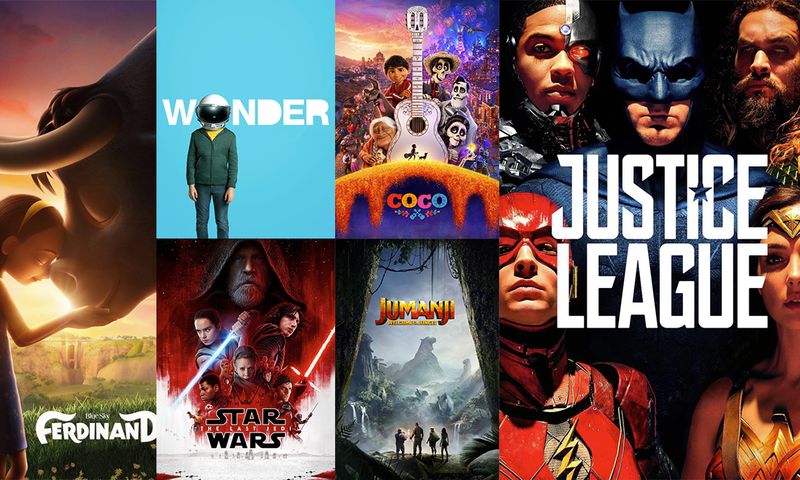
The drama genre often focuses on real-life events. Drama film is a genre that relies on the emotional and relational development of realistic characters. Common camera angles, movements, and shots found in a drama include close-ups,  long shots, over the shoulder, medium shots, extreme close-ups, bird's eye, point of view, pan, tracking shot, and wide shots. Close- ups are used to emphasize the expression on the face of an actor. Long shots and wide shots can be used to show the character and their surroundings. Usually the actor or object focused on will be in the center while anything else is in the background. Over the shoulder shots can be used for dialogue or to see the emotions of a character as they Arte told something by someone else. Medium shots show the characters facial expressions as well last body language. Extreme close-ups can add a sense of intensity or focus to a scene. Bird's eye can be used to gain perspective and show that one is of lesser meaning than another. Point of view can be used to let the audience experience how the character feels as they do something. Pan shots are commonly used for transition or to show off a setting in drama films. Tracking shots are used to follow the actor as they go through something (whether it's an activity or just walking). Common sound in drama films include, diegetic sound, dialogue, and voiceovers. Diegetic sound is used to keep the film as real as possible. Dialogues between characters are common whether they are positive or negative (they can allow ones feelings to be presented). Voiceovers are common when there is a narrator telling the story. There is a wide range of types of dramatic movies which allows them to differ greatly when it comes to mis-en-scene. When it comes to costumes, characters are usually dressed in normal clothing whether it's streetwear, business attire, etc. In some cases, the drama could be a period piece or happen in a made up world. In this case, the costumes would be created based upon that (capes, ballgowns, etc.). The same idea goes for makeup (can be normal but if it's a drama about drag queens, the makeup will be extravagant), setting (can take place in modern day New York or medieval France) and for props (could be something as simple as a pen or as fun a a wand). The lighting can differ based upon the mood but usually makes the movie even more dramatic. The actors have to be able to have a range of emotion, not just be funny or energetic. Drama films can vary which also can lead to variations of editing. However, drama films use a lot of cutaways, jump cuts, shot reverse shots, and eye line matches. The cutaways and the jump cuts are often used to show that time has passed. The shot reverse shot and eye line matches are often used when the character visits a new place or meets someone new. When it comes to drama films, I love that there are so many different types and that you never know what twists and turns it will have. I dislike when the movies are bad but not not intended to be (sometimes it's too cheesy). Some drama films include Titanic, A Star is Born, Harriet, All the Bright Place and Juno. More example are included in the picture below.


Tuesday, September 29, 2020

Genres I Would Like to Research

 The next step in this project is to research genres and find out which one our short film belongs under. My group and I have decided to research the genres thriller, comedy, and drama. We have decided to research the thriller genre because our short film is about the harsh obstacles three teenagers deal with in their personal lives. A thriller contains a lot of suspense throughout the film. Suspense could be useful in our film to show just how rocky their at home lives are. Comedy is the next genre we are looking into. Comedies are often more light-hearted and could help steer our movie in a more positive direction. A funny movie may also emphasize the innocence of the characters in the story since they are teenagers. There are also different types of comedy. There is dark humor, dry humor, comedy through action, romantic comedies, and so much more. A genre that has this much range is beneficial for a film in general. 

    Drama is the final genre we will be researching. Films that have teenagers as the main characters are often dramas. Dramas are often more realistic and take a dive into the emotions and events of the characters and their lives. Dramas contain themes that relate to real life problems. This is a good thing because it introduces a connection to form between the audience and the film. There are also different types of dramas. For example, a melodrama has many exciting events intended to bring our certain emotions. This could be really beneficial for our film because it deals with such a relatable topic that many people could have emotions about. Overall, researching different genres is very important when deciding which one your film belongs under.


Tuesday, September 22, 2020

Pitch Blog: Our Idea

 Three teenagers that each have family problems and deal with hardships at home, each put a superficial mask on for each other and social media.


Friday, September 18, 2020

Group Blog: Meet my Group-mates

This week, my class was instructed to decide whether or not we wanted to work individually or with others. I decided that since it went so well in AS Level, I would want to work with others again. Being able to interact with others to create media feels like the most fun and productive approach. A big thing for me was being able to trust that my group would be able to collaborate in person if we had to and online. Since I have known them for a couple of years now, we are very comfortable with one another and have all been quarantining. Now... It's time to reveal my group members for A Level Media. Drumroll please! I will be working with two other juniors who also happen to be in my class period. I've decided to collaborate with Sophia D'Ambra and Savanna Nemmers! Sophia, Savanna, and I have worked together before on projects and we know that we can all pull our weight while still having fun and being creative. I am very excited to work with them! In AS Level, we weren't all in the same class so being in the same group wasn't a great option, however now we are ready to finally be working together. All three of us have been working towards receiving our AICE Diploma. With this, we have been enrolled in multiple AICE courses. This year, all three of us share two AICE classes that correspond with creativity and the arts. These courses are AICE Media Studies A Level and AICE Drama AS Level. We believe that having both of these classes can give us somewhat of an advantage creatively. It's an easy way to bounce ideas off of each other and not letting them go to waste. We've already began talking about ideas and hope to make even better media than last year. Bring it on A Level! It's a bit hard to see but I'm third from the right, Savanna is third from the left, and Sophia is far left in the picture below.


Monday, September 14, 2020

It's A Level Time!!!

I'm finally back to creating new blogs! It's been a long few months in quarantine, but now I'm finally in A Level AICE Media Studies. It wasn't a hard decision to come back at all. I enjoyed making the beginning of a movie in AS Level so much that I knew I wanted to take this course again. Being able to learn new skills in order to prepare me for this course has been amazing and I'm so excited to see what happens this year. Immediately after finishing AS Level, I missed filming everyday, coming up with ideas, and being creative in my videos. I was extremely excited when I saw that there would be an A Level AICE Media Studies class at my school. At first, I was a little nervous because the end of AS was all online and I didn't know what to expect for this year. However, I feel that this situation has had a positive effect on this course as well. It has taught students how to adapt to any situation thrown at them. 

One thing I'm excited for would be working with a new group. All of my group mates from last year have decided no to continue the course. I'm more of a collaborative worker which meant I needed to find a new group or partner. Luckily, there are many people I know who are taking A Level an I believe I know who I will be working with. The next thing I'm excited for is the short film. I'm excited to create a full length film instead of the first two minutes of a film.With only being able to make the first two minutes, I needed to create scenes with a genre that would pull the audience in immediately. This gives the opportunity for me to explore other genres such as coming-of-age or comedy. Although I am excited, I am a little bit nervous about filming and editing a five minute film in comparison to the two minute film in AS Level. The process will definitely take more planning, but I'm ready to try my best at it!